Retail Data Analytics: Boosting Sales and Reducing Waste
From shelf-space optimization to churn prediction, discover how leading retailers use data analytics to outperform competitors and delight customers.
MarketResearchExplore Editorial
Market Research & Data Intelligence
How Data Transforms Retail Operations
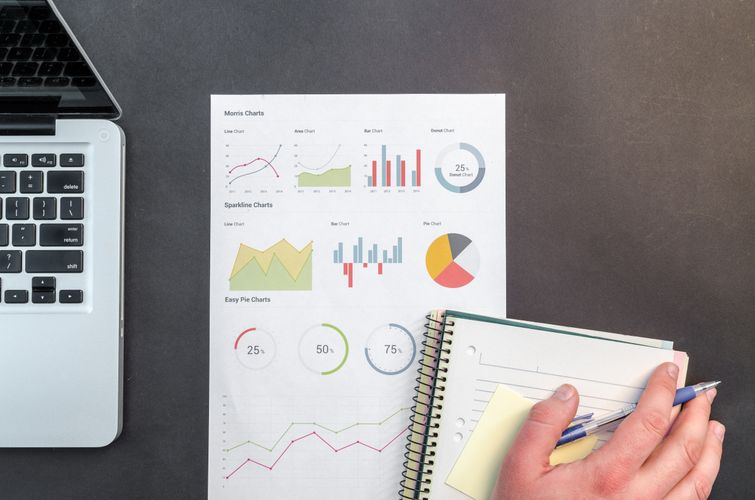
Retail has always been a data-rich environment — every transaction, return, loyalty card swipe, and abandoned cart leaves a trail. What has changed dramatically in recent years is the ability to act on that data in real time. According to McKinsey, retailers that leverage customer analytics extensively are 23 times more likely to outperform competitors in customer acquisition and 19 times more likely to achieve above-average profitability.
The shift from intuition-based merchandising to data-driven decision-making is no longer optional. Grocers are using sensor data to reduce spoilage. Fashion retailers are predicting trend cycles weeks before they peak. And convenience chains are adjusting pricing dynamically based on foot traffic patterns. Data analytics has become the operational backbone of modern retail — touching everything from shelf placement to staffing schedules.
The retailers winning in 2026 are not necessarily those with the largest stores or the most SKUs. They are the ones translating data into smarter decisions faster than anyone else.
Basket Analysis and Cross-Sell Optimization
One of the most powerful and commercially immediate applications of retail analytics is basket analysis — the study of which products customers tend to buy together. Rooted in association rule mining, basket analysis uncovers purchase patterns that human buyers would never detect at scale.
A classic example: a major supermarket chain famously discovered that beer and diapers were frequently purchased together on Friday evenings. That single insight reshaped an entire aisle layout strategy. Today, basket analysis operates at far greater speed and granularity, processing millions of transactions to surface actionable cross-sell and upsell opportunities.

Modern retailers use basket analysis to inform product bundling, end-cap placement, promotional pairing, and even online recommendation engines. Amazon’s “frequently bought together” feature — a consumer-facing version of the same logic — reportedly drives upwards of 35% of the company’s total revenue. For mid-market retailers deploying similar logic through their e-commerce platforms, incremental revenue lifts of 10–20% are commonly reported within the first year of implementation.
The key is moving beyond simple co-occurrence counts toward weighted association models that account for margin, seasonality, and customer segment. A grocery retailer pairing organic produce with artisan condiments will see very different results from one pairing the same produce with commodity staples — the data must be segmented to be actionable.
For teams evaluating the tooling landscape, exploring big data analytics tools 2026 is a useful starting point for understanding which platforms support real-time basket analysis at scale.
Inventory and Supply Chain Analytics
Excess inventory costs U.S. retailers approximately $300 billion annually. Stockouts cost another $1 trillion globally. Both problems share the same root cause: poor demand forecasting.
Predictive inventory analytics draws on historical sales data, seasonal trends, promotional calendars, and increasingly, external signals like weather forecasts and social media sentiment to generate demand curves at the SKU level. This means a sporting goods retailer can anticipate a spike in trail running shoe demand two weeks before a regional marathon, not two days after.
Machine learning models — particularly gradient boosting algorithms and LSTM neural networks — have proven especially effective at multi-step demand forecasting in retail environments with high SKU counts and complex seasonal patterns. Retailers like Walmart and Zara have built proprietary systems around these models, but cloud-based equivalents from platforms like Blue Yonder and o9 Solutions have made sophisticated forecasting accessible to mid-sized operators.
Beyond demand forecasting, supply chain analytics helps identify fragile supplier relationships, optimize reorder points, and flag lead time risk before it becomes a stockout. In the post-pandemic era, where supply chain disruption has become a strategic concern rather than an operational afterthought, this layer of intelligence is no longer a luxury.
Customer Churn Prediction
Acquiring a new retail customer costs five to seven times more than retaining an existing one. Yet most retailers still treat churn reactively — launching win-back campaigns only after a customer has already gone silent.
Churn prediction models change that calculus entirely. By analyzing behavioral signals — declining purchase frequency, reduced average order value, shift in category preference, lapsed loyalty redemptions — retailers can identify at-risk customers weeks or months before they defect. A well-calibrated churn model can segment customers into risk tiers and trigger personalized retention interventions while the relationship is still recoverable.
Pairing churn models with market segmentation research allows retailers to not just identify who is about to leave, but understand why. A price-sensitive segment churning during a period of price increases requires a very different retention strategy than a loyalty-driven segment churning due to a poor in-store experience.
The ROI on churn prevention is measurable and fast. Retailers implementing proactive churn models consistently report 15–25% improvements in 12-month customer retention rates among the segments they actively target.
Price Optimization with Data
Dynamic pricing is not new to retail — airlines and hotels have used it for decades. What is new is the granularity and speed at which physical and digital retailers can now adjust pricing across thousands of SKUs simultaneously.
Price optimization engines ingest competitor pricing feeds, demand elasticity curves, inventory levels, and margin floors to generate real-time price recommendations. In e-commerce, these recommendations can be applied automatically. In physical retail, they inform markdown strategies, promotional depth decisions, and everyday low price adjustments.
The most sophisticated implementations go further, modeling price elasticity at the customer segment level rather than the aggregate. Premium segments may show inelastic demand for certain categories, allowing margin expansion without volume loss. Value segments may respond to targeted promotions with outsized volume response.
Omnichannel Analytics
The average retail customer today touches three to five channels before completing a purchase. They may discover a product on Instagram, research it on a brand’s website, check reviews on a third-party platform, and ultimately buy in-store. Measuring and optimizing that journey requires omnichannel analytics — a unified view of customer behavior across every touchpoint.

Omnichannel analytics platforms stitch together data from point-of-sale systems, e-commerce platforms, email engagement, loyalty programs, and paid media to build a complete customer journey map. This visibility enables attribution modeling that correctly credits each touchpoint, budget allocation decisions grounded in actual customer paths, and personalization that follows the customer seamlessly from channel to channel.
Retailers with mature omnichannel analytics capabilities report customer lifetime value improvements of 30% or more compared to channel-siloed counterparts — a gap that compounds over time as data assets and model accuracy improve.
Key Takeaways
- Basket analysis and cross-sell optimization can deliver 10–35% incremental revenue lifts when implemented at the segment level rather than in aggregate.
- Predictive inventory analytics directly addresses the combined $1.3 trillion annual cost of overstock and stockouts facing global retailers.
- Churn prediction models generate measurable retention improvements of 15–25% among targeted customer segments.
- Price optimization at the segment level — not just the SKU level — unlocks margin expansion without sacrificing volume in inelastic customer groups.
- Omnichannel analytics is the connective tissue between all other retail data initiatives, delivering a 30%+ customer lifetime value advantage for retailers who get it right.
The retailers investing in these capabilities today are not just improving quarterly metrics. They are building data assets and modeling infrastructure that compound in value over time — creating a structural competitive advantage that becomes harder to close with every passing year.
Enjoyed this article?
Get weekly insights on market research, SEO, and data analytics delivered to your inbox.